EHR Integration

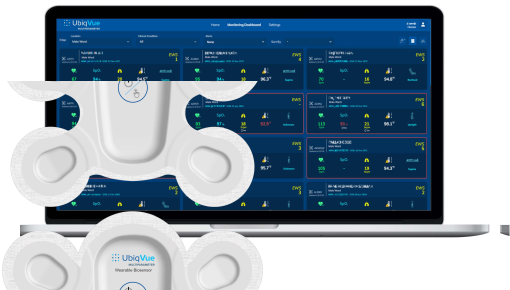
<strong “>LifeLine Medical Group LLC’s next generation, LLMG360+ multi-diagnostic platform, offers a wide array of monitoring solutions in one location.  Eliminating the burden of having to log into several portals when ordering multiple tests for a singular patient.  Our platform delivers secure, scalable, and fully interoperable EHR integration with all major healthcare platforms. We ensure seamless electronic ordering, structured results delivery, and real-time data exchange to optimize clinical workflow and revenue cycle coordination.  
Supported EHR Platforms

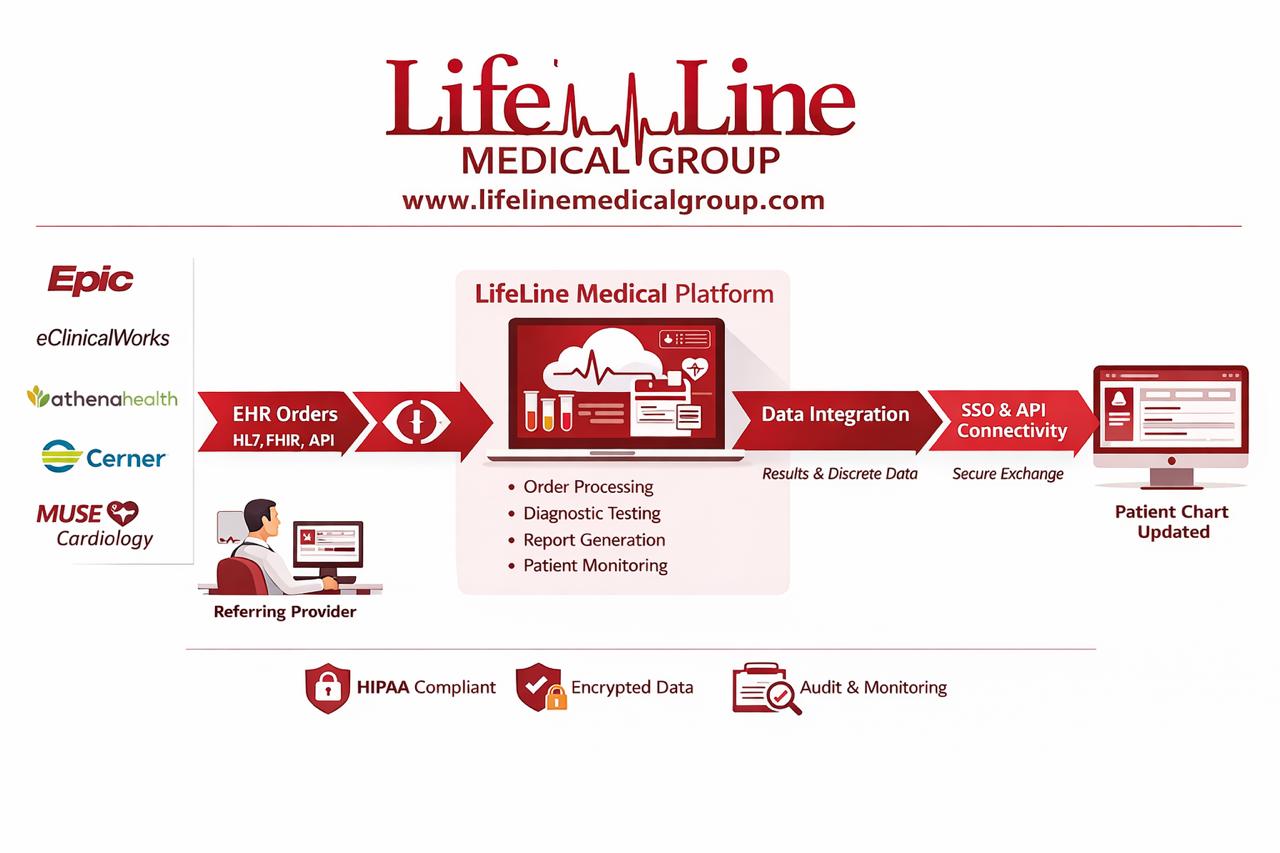
We integrate with all leading Electronic Health Record systems, including but not limited to:

  • Epic Systems (Epic)
  • eClinicalWorks
  • athenahealth (athenaOne)
  • Oracle Cerner
  • GE HealthCare (MUSE Cardiology)


We also support integration with hospital enterprise systems, specialty cardiology platforms, ambulatory EHRs, and custom practice management solutions nationwide.

Integration Capabilities

1. HL7, FHIR & Direct Messaging

  • Bi-directional HL7 v2.x (ORM, ORU, ADT) interfaces
  • FHIR-based interoperability for modern EHR environments
  • CCDA/CCD document exchange
  • Direct Secure Messaging support
  • Real-time order intake and structured results delivery

2. Secure API Integration (RESTful & Web Services)

  • RESTful APIs with JSON/XML payloads
  • OAuth 2.0 authentication and token-based access
  • Real-time order submission and status queries
  • Automated patient demographic validation
  • Structured discrete data mapping (vitals, cardiac metrics, ABI values, rhythm events)
  • Webhooks for instant result notification
  • Custom endpoint configuration for enterprise clients
 

3. Single Sign-On (SSO)

  • SAML or OAuth-based SSO
  • Embedded portal access within provider EHR
  • Context-aware patient launch capability

4. Automated Order & Results Workflow

  • Electronic order receipt directly from provider EHR
  • Order status tracking (received, device shipped, active, finalized)
  • Final interpreted reports delivered into the patient chart
  • Structured data + PDF report integration
  • Compatibility with enterprise cardiology systems (including MUSE)

Security & Compliance

• HIPAA-compliant infrastructure
• End-to-end encryption (TLS 1.2+)
• Secure VPN, API, or interface engine connectivity
• SOC 2-aligned hosting environment
• Full audit logging and role-based access control
• Business Associate Agreements (BAA) executed with all partners
Implementation Process – LifeLine Medical Group

Implementation Process

A structured six-step pathway to full EHR integration — designed for minimal disruption and maximum clinical efficiency.

01
1 Step One
Technical Discovery

Collaborate with your provider IT or EHR interface team to assess infrastructure and define integration scope.

🔍
02
2 Step Two
Interface Selection

Choose the right protocol — HL7, FHIR, API, or Direct Messaging — matched to your EHR and clinical workflows.

⚙️
03
3 Step Three
Mapping & Configuration

Map data fields, configure endpoints, and align structured outputs to your EHR's discrete data schema.

🗂️
04
4 Step Four
Test Environment Validation

Run end-to-end testing in a sandboxed environment to confirm accurate data transmission and report delivery.

05
5 Step Five
Parallel Workflow Testing

Operate alongside existing workflows, validating results and catching discrepancies before full deployment.

🔄

Provider Benefits

  • Eliminates fax-based workflows
  • Reduces staff workload and data entry errors
  • Improves compliance documentation for Medicare and commercial payers
  • Supports enterprise-level scalability
  • Accelerates diagnostic turnaround time
  • Enhances billing coordination between IDTF and referring provider

Contact Form